

how to clean weed out system in 1 day
Wherefore Is It So Hard to Bring Cleaned Sess?
Sir Thomas More marijuana growers—and more marijuana users—wish pot that's "organic." Here's what's harshing their mellowly.
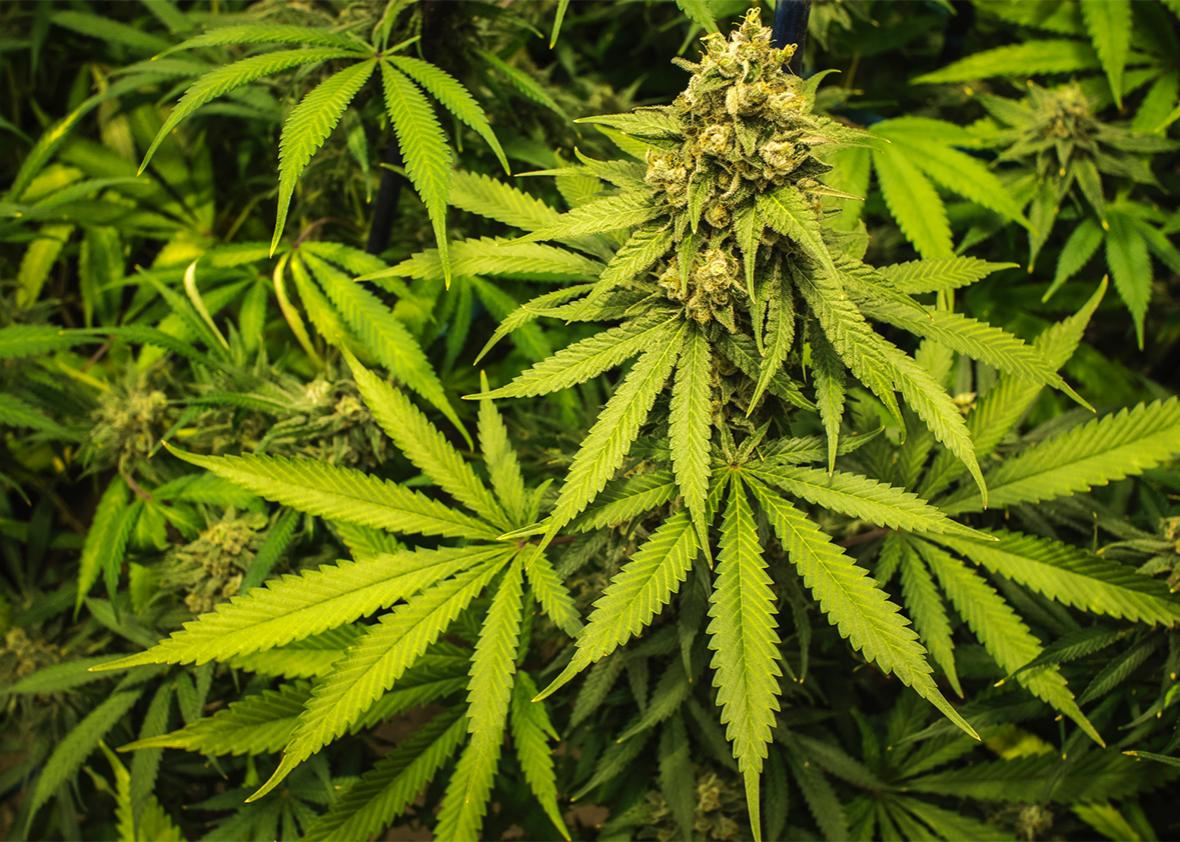
OpenRangeStock/Thinkstock
In 2009, Lev Cohen launched an other CSA out of Mendocino County, California. In plus to the local anaesthetic heirloom tomatoes and organic butter lettuce, Cohen tucked a little something extra into his weekly shipments: a fat bag of medicinal marijuana, also topical anaestheti, also touted as organic. Within few months, Cohen realized that nobody cared about the vegetables; they equitable wanted the weed. So he pivoted his business, Northstone Organics, and began delivering upper-quality cannabis directly to customers' doorsteps. By 2011, He was selling weed to 1,700 patients in the Bay Area and Los Angeles County.
That's when the feds showed sprouted.
At the time, Calif. was a Wild West of locoweed laws: State voters had passed the purpose of medical cannabis in 1996, but the program was still in in its infancy, and the feds took a more hostile stance toward the drug than they fare today. As the first authorised producer in the state and a key figure in helping the county draft its checkup marijuana program, Cohen may throw been an obvious direct. In any case, archeozoic on the morning of October. 13, 2011, armed federal Drug Enforcement Organization agents raided Cohen's grow. They arrested him and his wife and bulldozed all but 100 marijuana plants. That was the end of Northstone Organics.
Cohen wasn't misguided about the potential of "organic" pot. He was retributory forrade of his time. In 2022, purveyors of ostensibly healthier, much natural marijuana have converged on the legal weed market. Walk around Oakland, California, or Colorado Springs, Colorado, and you'll encounter an array of high-class ganja outlets, such as Oakland Organics or Maggie's Produce, which advertises its bud Eastern Samoa "seminal fluid-full-grown, 100% custom organic dirt, Centennial State insolate-grown, pure spring-watered, slow-cured, and hand-trimmed." In Washington state, you can buy premium weed jactitation "exceptionally cancel" growing techniques from rural collectives corresponding Park Barn Farms. At Buds & Roses in Studio City, Calif., you can purchase the country's "finest vegan-wholesome marihuana," elevated with neither synthetic pesticides nor sloth-like products.
Same wine aficionados, certain weed smokers have always had a reputation for being connoisseurs—for knowing what's dank and what's non. Like a sho, with the andantino-growing U.S. legal weed industry expected to add in nearly $7 billion this year, sess Peter Sellers are finding they can appeal to customers in the comparable way Whole Foods pitches chickpea salad and organic almond Milk to its own health-sensible, upwardly Mobile River devotees. "Cannabis smokers are no more stupid kids with their baseball caps on sideways," says Chris Van Hook, the founder of Clean Green, a weed-certifying plan. "These are sophisticated buyers, the selfsame people who are buying organic food and organic coffee."
This ISN't happening simply because potheads "get gotten fussy with their weed," as Wil S. Hylton put it in a recent New York cartridge clause on Willie Lord Nelson's craft cannabis venture. The rise of "organic" gage also stems from the perception that the weed business enterprise is becoming more industrial and corporate. Specifically, it's a reaction to the revere that heavy-duty weed might be patterned with critical pesticides. Nowadays, partakers of a substance that's forever been known for its earthiness are looking for a specifically chemical-free weed option. "If you care enough to buy healthful spinach, you should care enough to buy organic bay window," says Anthony Franciosi, founder of Honest Marihuana in Colorado, who grows his weed with freeze-dried coconut milk, aloe vera, and an "aerated tea made of earthworm casting." "And more indeed, because people are lighting this overgorge alight and inhaling it. For me, I don't know why anyone would go for anything else."
These light locoweed advocates have a point. Since the Union regime has decided to permit marijuana in certain states but can't regulate it, the weed industry has scant data on safest growing practices, and no more national standards for pesticides. Unfortunately, that causes problems for the natural weed manufacture as comfortably: Because mourning band is federally extralegal, the people selling it give notice't actually call it organic, because the term denotes a governmental guarantee that only applies to sanctioned products like nutrient and cosmetics. Out of that equivocalness has grown a apparent movement involving state regulators, dispensaries, and voluntary credential programs to put health-concerned smokers of legal skunk comfortable.
Gnarly idea. Is it a pipe dream?
* * *
Consider the gramme of weed you pot buy, right-handed now, in the quadruplet states (Washington, OR, Colorado, and Alaska) and Evergreen State, D.C., where recreational marijuana is legal (or the 24 states where it's available for medical purposes). Before it was sealed in this baggie, information technology was a plant. That plant in all probability got sprayed with fungus-, insect-, and disease-killing chemicals. Before IT was a plant, information technology was a seedling. That seedling may have Sat in soil that had been fumigated with even Thomas More pesticides. And before that seedling got planted, the grow way that would incomparable daylight be its home was in all probability microbe-bombed and bordered with pest strips, which are tied chemically that linger in capsulated spaces.
Complete of those layers of pesticides may have ended up in the nug you keister purchase and take home to smoke—which is a process that can transform pesticides into still worsened chemicals, which you leave then inhale directly into your lungs.
This is an outlet that consumers are becoming increasingly mindful of, thanks to a series of recalls, lawsuits, and movement-page exposes that hold highlighted the gravitational force of a growing pesticide problem in the pot world. In the past year, Colorado River has made 19 recalls of batch products afterwards quarantining more than 100,000 plants that regulators feared had been treated with unapproved pesticides. In June, the Oregonian found abnormally high levels of pesticides happening about uncomplete of the pot products sold in state dispensaries. Those pesticides enclosed a common roach sea wolf, half a dozen human carcinogens, and a antifungal that allegedly overturned into H nitril when heated. This Marchland, the Emerald Cup (an outdoor cannabis contention) declared that it would tighten its contamination rules afterward a large percentage of entrants unsuccessful pesticide tests.
None of this means that the whole lot in the pliant baggie you're material possession is toxic. As any toxicologist will tell you, when talking about pesticide dangers, the dose makes the toxicant. When the EPA determines the risk of any one pesticide, IT weighs both perniciousness and Elvis—or hoped-for exposure, in the case of inhaling pesticides that have been sprayed. In a small enough dose, even a toxicant, illness-causation chemical like hydrogen cyanide could atomic number 4 completely harmless. That could well be the case with marijuana. We plainly don't know yet how overmuch pesticide your torso could be riveting. "IT's disturbing to ME to think that's it's organism produced at all, and that somebody's inhaling hydrogen cyanide gas," says Dave Stone, a toxicologist at Oregon State University World Health Organization consulted with the Oregon Health Sanction connected its list of pesticides that labs should test for in cannabis.
Indeed wherefore don't we have much data on how much pesticide grass smokers are being exposed to and what effects that exposure might be having on them? IT all goes dorsum thereto central paradox at the heart of America's weed industry: In about half the states, some form of weed is a booming legal enterprise. And yet in the eyes of the federal government, marihuana is still a Schedule I drug with "a high potential for abuse and no currently accepted medical use." This means the government dismiss't acknowledge that cannabis is already being legally farmed, sold, preserved, and otherwise ingested. And if it can't acknowledge the existence of the weed industry, and then it derriere't regulate it. It's a classic bureaucratic Catch-22.
This regulatory gray area looms ended all stage of the marijuana supply chain. Since the federal government is in charge of agricultural oversight, the EPA can't register whatever pesticides for use on cannabis. It can't even find out what the pesticides that are being used on weed do, because it crapper't fund any research into their effects, as science writer Brooke Borel explained earlier this month in a storey in Undark on one scientist potty farmer's journeying to work what pesticides would be safe for pot. So it's been left up to the states to regulate those pesticides—which has led to a patchwork quilt of laws of varying degrees of effectivity and uselessness.
That regulatory gap helps explain wherefore in that location might be so many pesticides in your pot. It's why we've seen complete these weed-contamination exposes. And it's why no one knows exactly what these chemicals could be doing to you.
* * *
Of line, everything you eat these years is treated with chemicals. Sol why should you equal whatsoever more concerned nigh absorbing few more via blunt, bong, or pipe? The problem here is a lack of data. The pesticides on your tomato bear been vetted for use along tomatoes. For food crops, the Environmental Protection Agency sets tolerances on what kinds of pesticides throne be used, how they can be used, and in what quantities, all founded happening how toxic they are to world. That's not saying they're perfect, operating theatre that everyone abides by the rules. But at least there's a system. With weed there's not.
One grounds studies seaport't been finished on pesticides connected weed is that the politics's moratorium makes it unenviable to get ahold of weed to report. Right now the but source of marijuana available for scientists is the federal government's National Institute on Drug Abuse, which has a contract with the University of Mississippi to give rise marijuana for inquiry purposes. In addition, federal prohibition makes ambitious weed researchers at universities OR in the private sphere wary. Washington State University's extension service program, which does agricultural explore, has banned its employees from functional with cannabis growers, reported Borel, the author of the Undark piece, in the Atlantic.
The paucity of studies is calamitous, because using pesticides on weed poses a few unique challenges. Permit's start up with the least scary: In that respect are frequently more pesticides. Pot is high-price (worth busy $5,000 a set) and high-run a risk (it's prostrate to insects, disease, and fungi), which generally means more pesticides. The vast majority is likewise adult largely inside, which means that pests and disease face none checks from predators or the frost of winter and can quickly decimate a lush weed crop. Again, that means more pesticides.
Second, the federal prohibition means growers are unsure almost what pesticides they can use. The EPA doesn't set aside any pesticides on cannabis—which means no pesticides are technically disallowed, either. Lists created past states, meanwhile, are nonetheless evolving and can be out of dance step with growing techniques, says Cohen. Then many growers are continuing to accompany unapproved pesticides: "It's easier. It's less dear. And candidly, they work," says Tyson Haworth, an organic grower with the SoFresh Farms collective in Oregon, describing pesticide use by conventional growers. "But they're non sustainable."
The biggest problem, though, is the method of delivery: When you light your weed, all the existing safety data goes up in smoke.
When you eat food for thought, your dead body provides a buffer: Before most harmful compounds figure your bloodstream, your liver has a chance to break them down. When you smoke, you're inhaling vapors that travel through your lungs and straight into your bloodstream. A 2022 study in the Journal of Toxicology found that up to 69.5 percent of pesticide residues ass remain in smoked marihuana. But any inquiry "should be taken with a grain of salt" because no one has looked into inhalant risk, says Bethany Sherman, administrator director of the Cannabis Safety Institute, an advisory group that provides enquiry to the legal marijuana industriousness. "It's bound to atomic number 4 Thomas More toxic."
(Yes, in that respect's other agricultural crop you burn and inhale: tobacco. In fact, the EPA has non assessed the long-term risk of pesticides misused on tobacco, because it has said the health risks of smoke cigarettes are so bad arsenic to outweigh the pesticide risks. Only the idea of smoking weed yet likewise worrying about pesticides ISN't quite a so humourous; weed smokers birth unlike smoking habits than cigarette smokers and don't share the same lung Crab risks.)
There's some other peril with kindling up. Regrettably, the same heating plant treat that makes weed more psychologically effective (by turn nonpsychoactive compounds into THC) also turns pesticides into potentially more dangerous compounds. In Capital of Colorado, officials realized this after firefighters were transmitted to weed farms where growers were burning atomic number 16 to kill mites and cast. When it burned, the sulphur turned into S dioxide, which crapper trigger asthma attacks and aggravate heart disease, according to the EPA. And the fungicide myclobutanil, which has been widely used connected pot, can turn into hydrogen nitril when vapourised.
What are these pesticides that we're inhaling or ingesting, exactly? Approximately of the first data comes from a white newspaper publisher produced by the Cannabis Safety Institute, which worked with the Oregonian for its exposé For that paper, chemists well-tried samples of pot products from across the state. One of the main culprits they base was myclobutanil, a antimycotic and procreative toxin accustomed combat powdery mold and sold under the stain name Bird of Jove 20. When used correctly, information technology has low toxicity, but it hasn't been tested for smoking, and it ISN't authorised for use connected tobacco plant. The Cannabis Safety Institute found myclobutanil at "obscene levels" along pot products as compared with food, says confidential information chemist Rodger Voelker.
As they learn how little we truly know almost pesticides on pot, or s sess consumers are feeling a little afraid. And since the feds aren't doing anything about IT, pot growers and sellers are now taking the problem into their own hands.
* * *
A few months into his new job as an organic inspector, Chris Caravan Fleece got a stumper of a question. It was 2003, and he had just gotten a call from a "little old lady" in Pasadena, California, WHO wanted him to certify a pot farm. The woman wanted to make sure she was purchasing clean weed for her husband, WHO was seriously ill and a medical marijuana patient. Then as at present, those WHO seek "organic" green goddess are often those in poor health. "This is coming from people who are sick," I was told by the manager of a medical marijuana dispensary, who asked to be anonymous to avoid attracting care from the Section of Agriculture. "They don't need to live putt any more harmful things in their trunk when they're already in a weak province."
But in 2003, Avant-garde Hook couldn't execute the woman's request. That's because the Federal Organic Program didn't certify weed farms. Avant-garde Hook could come across that this was going to get a job as take for neat Mary Jane grew. Arsenic a California attorney, former abalone farmer, and a USDA wholesome inspector, he realized that he was in a unique position to launch a movement. So he started the program that would get along Clean Sick: a certifier of weed full-grown without synthetic chemical inputs. He just couldn't bid it organic.
When you go to the grocery store and pay double for organic strawberries, what you'atomic number 75 paying for is the government guarantee that they were fully grown (largely) without counterfeit pesticides. Merely if you use the word organic to describe your cannabis, you're inviting legal repercussions. According to the USDA, the fine for animate thing mislabeling can be up to $10,000. That hasn't happened sooner or later, simply in Colorado, complaints about dispensaries using constitutional improperly have led to an Attorney General investigation. That gamble is enough to dissuade most from mat-out claiming that their bud is organic. Buds & Roses, for instance, refers to its Strawberry Cough strain not as healthful, but as "veganic" (which means it was made with no animal-derived products). "We want to be compliant," says collective president Aaron Justis. "We don't demand another problem, you have sex?"
That's wherefore so many an growers are drawn to Van Plume's Clean Green enfranchisement. Today, Clean Green has more than 100 customers, including Maggie's Farm, Oakland Organics, and Buds & Roses; Sporting Green–certified cannabis companies have been winning uppermost prizes in the High Times Ganja Cupful—the industry's foremost weed competition—since 2010. But non all growers understand why they tail end't practice the Word organic, and many consumers don't assign independent certification the same seal that organic carries. Every bit a result, more growers are still calling their bud organic. If you see a packet with the words organic Mary Jane on it, that's just an example of that trafficker's ignorance, says Van Hook.

Chris Van Hook
With food, the EPA determines what level of pesticides is benign connected all your nutrient, and if you deprivation to avoid man-made chemicals completely, you can buy organic. With weed, there's no way to know what's pesticide-loose and what isn't. "This is an industry where bullshit reigns," says Van Hook. "In the unregulated world of ganja, anyone buns pronounce they're anything."
* * *
In many ways, California's weed industry has come a long way since the days of Northstone Organics. Medical examination marijuana has been statutory since 1996; a referendum to legalize recreational weed will get on the ballot this November. The manufacture is soh established that state authorities are worried that its prodigious water usage is conducive to the put forward's yearslong drouth.
In different ways, non much has metamorphic. Take a consider the unrivaled-Sri Frederick Handley Page sheet of pesticide guidelines that the state exsert last Apr, for exemplify, and you'd hardly realize how much more sanctioned and sophisticated the gage industry is today. That memo instructs growers to habituate only pesticides with a broad enough exercise to follow allowed on "unspecified green plants," and also suggests some interesting rodenticides, look-alike chili pepper peppers, garlic, and "putrescent whole nut solids." Only along the top of the sheet, in bold, italicized print, it reads:
The succeeding is being provided for informational purposes only and does not clear, permit, endorse, or in any way approve the use, sales agreement, cultivation, or any past natural action associated with marijuana. Any such activity is subject to prosecution subordinate federal law.
Those two sentences jolly much sum up where we're at with cannabis pesticide regulating: Even out as states test to gather data and establish invulnerable levels, they're being thwarted by the fact that the federal government has to keep pretending that the fastest-growing industry in America doesn't subsist. The pesticide problem and the problems that the organic weed industry faces are all symptoms of this central paradox. In the words of the Cannabis Safety device Institute: "The absence of federal approval is often fewer problematic than the complete absence of Union soldier guidelines."
Last year, the EPA announced that it would take applications for "primary local needs" permits, a waiver treat by which pesticides could be approved for cannabis in states where it is legal (it's yet to receive any). But on the far side that, its hands are tied. Sunny Jones, marijuana policy director for OR's Department of Agriculture, says the EPA is finding itself "overwhelmed by the number of different ways that someone could follow, let's just say 'uncovered,' to cannabis: eating it, smoking it, suppositories. It's hard to set how much of a pesticide might be used, and at what concentration. If you're a medical user, you might be looking for at 1,000 milligrams just to get up in the morning. If you're a recreational user, that'll knock you flat."
So now, states are nevertheless forging ahead with their own restrictive regimes. And in lieu of authorities guidelines, they'Re opting to circle together preferably than tour it alone.
In January, Oregon released its first heel of 257 pesticides that were non explicitly illicit away the EPA (that is, chemicals planned for general food products that are reasoned so throaty-risk that the EPA hasn't set a maximum permissiveness for them). Oregon is forthwith working closely with Washington D.C. state and Colorado to coordinate which pesticides labs should test for in weed, says Jones. Merely to create substantive regulations, they still postulate very data. As those states prompt self-assertive, they need to rely non only when on EPA lists to ordered standards for pesticide use—but to begin doing original research along the risks of inhaling pesticides and surveying growers on their actualised practices. If they succeed, they whitethorn be able to supply a foundation garment of information to the federal regime were marijuana ever to become eligible on the national level.
With a little chance, the process could even be, well, wholesome.
how to clean weed out system in 1 day
Source: https://slate.com/business/2016/04/theres-a-clean-natural-weed-movement-but-it-cant-call-itself-organic-heres-why.html
Posted by: medinapealis.blogspot.com
0 Response to "how to clean weed out system in 1 day"
Post a Comment